rtshkmr's digital garden
😌 Welcome #
It’s fresh so please watch this space for a bit as I water it more.
It’s fresh so please watch this space for a bit as I water it more.

Paxos is used as a learning substrate Paxos is hard to understand and harder to implement right. This project keeps the scope to single-decree Paxos — narrow enough to be tractable (~2 weeks) and deterministic enough to verify cleanly. in this series. This addendum hosts my observations and intuitions on some core concepts revolving around this space that may help fast-track other learners. It also aims to funnel readers to actual canonical work that others have done.
This is Part I of a series on learning OCaml through building a Paxos simulator. Here, we stay away from the code entirely and focus on listening closely to the forces that will shape the architecture.

This is Part II of a series on learning OCaml by writing a Paxos simulator. We build on Part I’s abstract grammar and witness how subsystems take shape from it — guided, as it turns out, by the OCaml compiler I’m sure the magical source within the compiler is rooted in the underlying Hindley-Milner Type system which expects the programmer to exercise clearer type-discipline in exchange for superior inference capabilities that feel like an extension to the programmer’s own mind. I’ll put up a few words about what that experience has been like in Part III, coming soon itself.
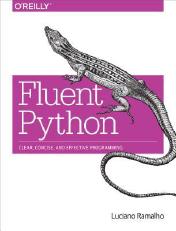
My notes from “Fluent Python – Clear, Concise, and Effective Programming” (2nd Edition) by Luciano Ramalho. Originally captured via org-noter, then enriched with practical annotations, interview-relevant observations, and code examples.
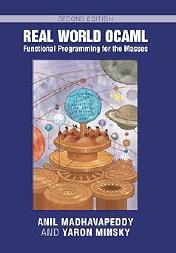
Real World OCaml is supposed to be a intermediate-depth introduction to the OCaml ecosystem, with some rigour to drive home the intuition around the language constructs and under-the-hood mechanisms. It was fun to read this and to see patterns from other worlds like the Elixir world and OOP world be mapped to the world of OCaml and the greater ML-family of languages.
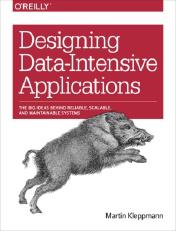
This is one of the bread-and-butter books; read it a long time ago and the org-noter notes for it are just ported over to this blogging system for now, these notes are yet to be polished.